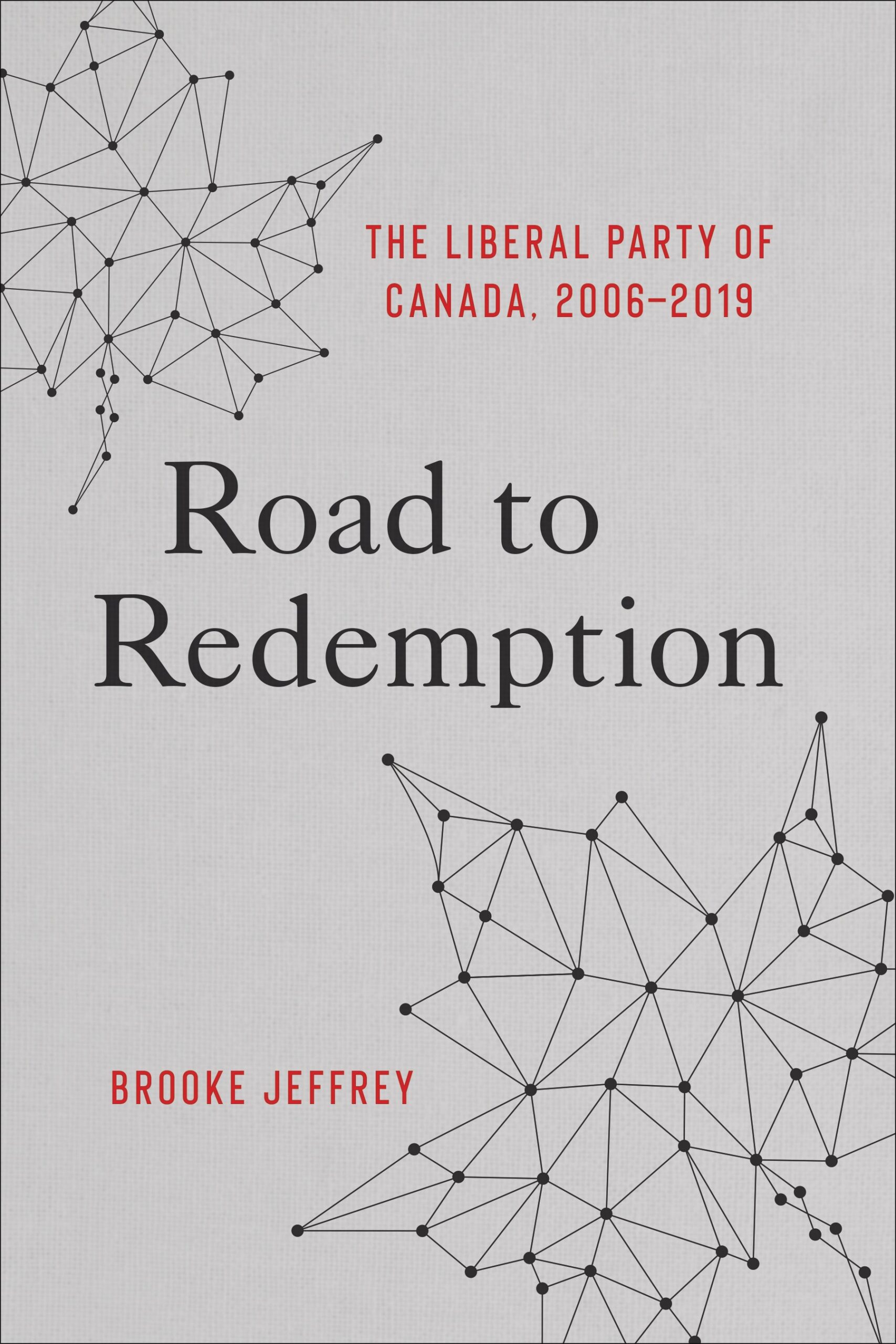
Most of the commentary on the just-released federal budget – both positive and negative – has focused on the document’s Big Picture plans. This is hardly surprising since the vast majority of the lengthy 500-page document concentrates on that very thing. This budget is clearly a faithful and more detailed outline of just how the prime minister intends to bolster the domestic economy, create new wealth and jobs, and provide the revenue to finance the various social and cultural programs Canadians value. The question most often asked is whether it will work.
On the whole the response of experts seems to be cautious optimism. Mr Carney, they conclude, is on the right track, but it is too soon to tell if his plans will work out. In many respects it is a gamble. Everything hinges on what the budget describes as the plan’s first pillar – “to accelerate growth through an investment supercycle.” There may be other measures he could have taken, they suggest, but this package makes sense in terms of that stated objective and it may well do the job, or at least go a considerable distance in the right direction.[i]
Opposition politicians, too, have concentrated almost exclusively on the Big Picture items. Conservative leader Pierre Poilievre, for example, spoke mainly to the debt and deficit levels being incurred to support the plan, which he claimed were unacceptable, referring to a “costly credit-card budget” that is “mastered by debt.” [ii]. Meanwhile NDP leader Avi Lewis, while admitting there were numerous measures in the budget designed to mitigate against current cost-of-living issues, nevertheless argued that the plan places too much emphasis on the Big Picture’s long-term objectives and not enough on direct support for Canadians currently struggling to make ends meet.[iii] Not surprisingly, both Lewis and Green MP Elizabeth May also argued that many of the Big Picture measures would benefit corporate Canada and wealthy elites more than ordinary Canadians, at least in the short term.
Seemingly lost in the wash in this initial series of responses are some striking developments that appear to demonstrate two things: first, that the government has recognized the importance of the cost-of-living issues for its continued electoral success and second, and equally important, that it has recognized various policy errors it has made earlier and is now attempting to correct them in this document, albeit quietly and with little apology.
This latter strategy seems to be working. Apart from noting the government is reneging on the rash commitment to massively increase Defence spending, few commentators appear to have picked up yet on many of these course corrections. Yet the government’s decisions to either modify or reverse its position on some earlier policies do, in fact, bode well for the Carney LIberals. Having come to power with little or no experience of government and an over abundance of familiarity with the corporate sector, mistakes could have been anticipated. Correcting them was not necessarily inevitable. Four of the most significant:
(1)The commitment to 3.5% of GDP on Defence spending by 2035 was always completely unrealistic and is now being quietly ignored
Pierre Poilievrre learned his lesson on defence spending commitments more than two years ago, when he originally leapt at the chance to beat the prime minister to the punch by agreeing with NATO’s 2% benchmark. Within days of his rash announcement he was quickly backing down, having learned just how difficult it would be to reach that goal. Instead he began talking of “working towards” that 2% objective without setting a firm date for achieving it, and suggesting measures such as cuts to foreign aid to help reach the goal, knowing full well that the amount in question would represent a mere drop in the bucket. Needless to say he has stayed almost entirely out of the current discussion on the 3.5% commitment, apart from declaring that the massive “dumpster-fire” debt and deficit prevent the government from spending more on national security.[iv]
Happily it seems the Carney government has now recognized just how unrealistic its commitment was. Budget 2026 quietly ignores the 3.5% target, indicating the government will spend $11.2 billion over the next five years, a far cry from the $84 billion 5-year defence plan outlined in Budget 2025, now expected to remain at roughly 2.6% by the end of that period. As Carleton professor Philippe Lagasse, a defence procurement expert, commented, this suggests the government has now recognized it simply does not have the capacity to spend faster on defence.[v] Put another way, achieving that objective would have required deep cuts to far more than foreign aid programs, cuts which most Canadians would have been unwilling to contemplate. (Keep in mind that even at this reduced level of commitment, Defence spending will soon exceed health transfers.[vi] In addition, as both Lagasse and David Perry, President of the Canadian Global Affairs Institute, noted, the government’s desire to support domestic defence production and innovation will inevitably require more time as the industry gears up and develop requisite competencies. [vii]
(2) The plan to privatize major airports is now effectively dead in the water
More good news. You know a government is having second thoughts when it punts a decision off to a committee for further study or preliminary framework legislation. In this case, the out-of-the-blue announcement on major airport privatization that came so unwisely at the end of Carney’s Toronto investment fair appears to have been given second, third and even fourth thoughts. All that Budget 2026 says on the matter is that the government will introduce legislation at some point that will lay out the ground rules and ensure that passengers do not face increased costs as a result of this plan. Oh, and it hopes to begin a selection process for the first candidate in 2029. Notice that the next federal election is scheduled for 2029…. Clearly someone has seen the negative public response, including a strong belief that everything from airline fares, airport fees and even parking rates will go through the roof.
(3) The misguided plan to close some pathways to permanent residency has been rectified
Given growing public discontent over the perceived, if unintended, consequences of the federal government’s dramatic increase in the number of immigrants and permanent residents accepted into the country after the pandemic, (think housing shortages, unemployed youth ), the Carney government obviously felt obliged to take action. This decision to act was also motivated by the dauntingly long and growing backlog of applicants for permanent residency status clogging the system.
In addition to reducing the number of immigrants accepted annually, the Carney government responded by drastically limiting the number of foreign students and other temporary residents, and by closing some popular programs that had provided a pathway to permanent residency for those already working in the country. In late 2025 this included a decision to terminate the Agri-Food Pilot some three months before its planned end-date, followed by the closing of applications for the Home Care Worker Immigration Pilots on Child Care and Home Support, both of which had been expected to re-start in Spring 2026 but were now declared closed util 2030.
Unfortunately, it soon became clear that this had not been a good decision. Quite apart from the obvious unfair treatment of some individuals already living and working in Canada, who had actually been encouraged to come, the closing of those programs soon raised concerns that there would be serious shortages of available workers in those areas. Concerns were also raised about the fate of those refugees from Ukraine and Hong Kong whose situation remained in flux and now appeared to be without protection giving the closing of a humanitarian pathway as well.
The Budget’s clever solution to rectify the situation was to automatically grant permanent resident status to some 200,000 temporary residents, (representing the two categories of individuals outlined above), thereby preventing potential shortages, avoiding human rights concerns and simultaneously reducing the massive bureaucratic backlog.[viii] Whether anyone will notice the sleight of hand is another matter.
(4) The plan to slash permanent public service jobs has been recognized as overeager and halted
Speaking of backlogs, there are a number of areas in which the federal government is increasingly being criticized for the decreased level of service it provides to citizens through its public service. From immigration and passports to income tax processing, lengthy delays and incorrect information have become the norm. The decision in Budget 2025 to reduce the federal public service by some 40,000 positions, and in record time, has exacerbated an already concerning situation.
For example, in October 2025 the Auditor General issued a scathing report decrying lengthy delays and frequently inaccurate advice being provided at CRA call centres, a situation she directly attributed to a shortage of personnel.[ix] Yet a year later, in early November 2026, the CRA issued some 735 work adjustment notices to employees, (and expects at least 260 to have left before tax filing season in early 2027), in order to meet its reduction targets in advance of the 2026 budget. [x] These unintended consequences were ironically highlighted once again by the Information Commissioner just days before the 2026 budget was tabled. Caroline Maynard testified at a House of Commons committee meeting on November 2 that there is a “hollowing out” across the public service and “Delays are increasing because of cuts, because of retirements…there’s simply a lack of resources.”[xi]
Nevertheless the government was widely criticized for the significant increase in the number of permanent employees in the post-Covid aftermath, which had occurred despite a concomitant increase in outside contractors. As a result few would have argued that some measures were necessary to “rebalance” the size of the public service. However, in its haste to react to this vocal criticism, the government essentially threw the baby out with the bathwater. While some concerns over total numbers were valid, the methods used to bring about a rapid reduction in those numbers were not ones public administration experts generally consider to be the most effective or efficient. Quite the contrary.
Across-the-board cuts, for example, often fail to take into account the very different situations of component parts of an organization, (in this case individual federal departments and agencies), thereby leaving some units with an excess of personnel at the same time that others are hamstrung.
Similarly, structured buy-outs based on voluntary retirement and early retirement incentives — considered more acceptable from a human resources and union perspective – nevertheless often produce a situation in which the most competent (the so-called best and brightest) are the first to leave. In addition any progress made towards diverse representation may be reversed, and the overall workforce may age significantly since no younger recruits will be hired. The high cost of retirement incentives may also be problematic.
Various aspects of this scenario already played out in 1995-7 under the Chretien Liberals, who undertook a similar cost-cutting exercise with respect to their public servants. This earlier plan is being cited by many current critics of federal “flab” as the model to follow, in spite of the problems that were encountered.[xii]
The Budget makes it clear that the Carney government has recognized it has gone far enough, if not too far, and it is time to call a halt to further reductions. Claiming victory, and stressing there will be no further cuts, the Budget states the government has “nearly” reached the targeted 40,000 job reductions.
Apart from concern over the growing problems in delivery of service which the cuts are producing – and which the government acknowledged indirectly by announcing, perhaps rashly, that it will introduce AI programs to replace workers and resolve the matter – there is also a growing concern that the cadre of competent and experienced public servants necessary to implement the government’s aggressive agenda may be missing. As Sahir Khan, former Deputy Parliamentary Budget Officer and current Executive President of the Institute of Fiscal Studies and Democracy at the University of Ottawa, notably commented, “The other issue is, Do we have the capacity within the public service to deliver on an ambitious agenda? And…I have not heard much about how that capability is being built up.”[xiii]
At the end of the day, the Carney government’s objectives may be long term, but the 2026 budget demonstrates that immediate decisions are crucial in ensuring that the Big Picture agenda can be managed.
[i] See for example https://markhamhislop.substack.com/p/economist-ian-lee-gives-carneys-budget
[ii] https://www.facebook.com/PierrePoilievreMP/videos/mastered-by-debtyou-will-pay-more-for-carneys-costly-credit-card-budget-conserva/2404575966968462/
[iii] https://www.thestar.com/politics/federal/federal-budget-2026-live-updates/article_212ef27a-51b3-44b6-89ec-ed0b520678e5.html
[iv]https://www.reddit.com/r/CanadianForces/comments/1e1wmsy/poilievre_wont_commit_to_nato_2_target_says_hes/
[v] https://www.theglobeandmail.com/politics/article-federal-budget-defence-spending-2026-canada/
[vi] S. Ritchie. “Defence spending will soon outstrip health transfers”, Ottawa Citizen. November 6, 2026.
[vii] https://www.theglobeandmail.com/politics/article-federal-budget-defence-spending-2026-canada/
[viii] https://ca.news.yahoo.com/ottawa-shift-more-temporary-residents-210713620.html
[ix] https://ottawacitizen.com/public-service/auditor-general-cra-call-centre-staffing
[x] https://ca.finance.yahoo.com/news/cra-cuts-735-jobs-weeks-120000156.html
[xi] B Andrews. “Cuts Bog Down Access to Information Response Times” Ottawa Citizen. November 5, 2026
[xii] https://nationalpost.com/opinion/first-reading-carney-plan-to-reduce-civil-service-will-cost-1-5-billion-save-82-million/ and https://academic.oup.com/book/44933/chapter/384863273
[xiii] https://www.cbc.ca/news/canada/ottawa/feds-have-nearly-hit-civil-service-reduction-target-budget-shows-9.7410586